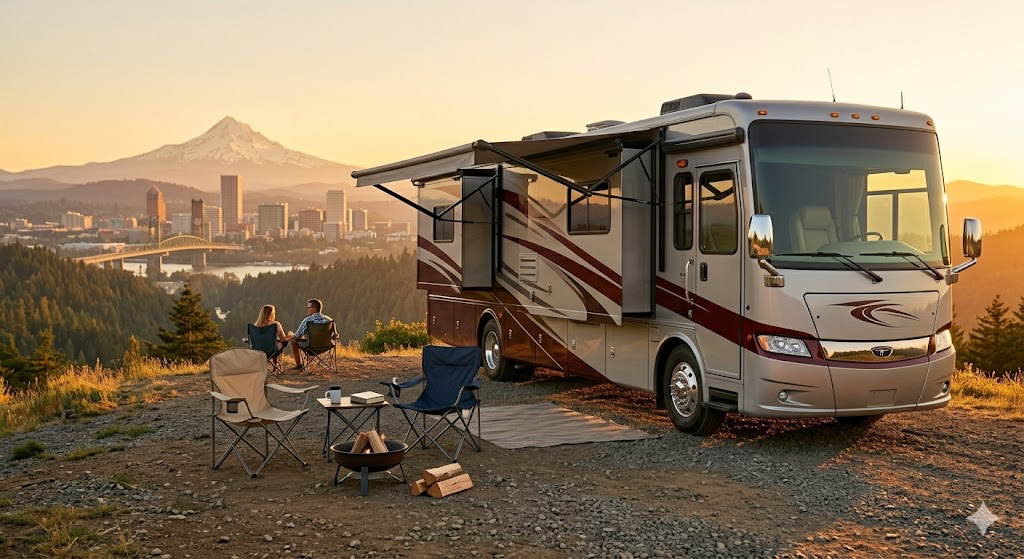
You found the perfect RV. Maybe you bought it from a private seller, inherited it from a family member, or picked it up at an estate sale. The price was right, the rig is solid, and you’re ready to hit the road. Then you realize the title is missing, unreadable, or was never properly transferred into your name — and suddenly the dream is on hold.
This is one of the most common situations RV buyers face, and there is a clear legal solution: a bonded title. Understanding how the process works, what it costs, and how to move through it without delays will get your RV registered and road-legal faster than you might expect.
What Is a Bonded Title for an RV?
A bonded title is a certificate of title issued by your state’s Department of Motor Vehicles that is backed by a surety bond. It works as a legal substitute for a standard title when the original is lost, destroyed, never issued, or cannot be transferred from the previous owner. The surety bond attached to it — called a certificate of title bond, lost title bond, or defective title bond — is a financial guarantee that compensates anyone who later proves they are the rightful owner of the RV.
Three parties are involved: you as the principal (the person applying for the bonded title), the state DMV as the obligee (the entity requiring the bond), and the surety company that issues and backs the bond. The bond does not prove you own the RV — it simply allows the DMV to issue a title in your name while protecting any potential claimant who may surface during the bond period.
Once the bond period ends — typically three years in most states — with no valid claims filed against it, the DMV removes the bonded designation and issues a standard clean title. At that point, the title is indistinguishable from one issued through any normal channel.
Why a Missing RV Title Is a Bigger Problem Than It Sounds
Without a valid title, you cannot legally register an RV in any state, cannot purchase insurance in most cases, and cannot sell it without exposing yourself to significant legal risk. RVs that sit without registration become impossible to move on public roads and difficult to insure even at a private campground. A bonded title resolves the ownership gap and restores full legal standing to the vehicle — the right to register, insure, sell, and operate it.
Does Your RV Actually Need a Bonded Title?
Before pursuing a bonded title, it is worth confirming that no simpler solution is available. A bonded title should be a last resort. If the original title was in your name and you simply misplaced it, your state DMV can typically issue a duplicate at a small fee. If you have a bill of sale and there are no liens on the RV, you may qualify for a replacement title without a bond. If you can still reach the previous owner whose name is on the title, the most direct path is having them transfer the title into your name through a standard transaction.
You need a bonded title when the simpler options are exhausted — when you cannot reach the previous owner, when the title was never properly issued or transferred, when the paperwork is damaged or contains errors the DMV cannot fix without a bond, or when the RV was gifted or inherited without any title documentation.
One important check before you begin: not all states offer bonded titles. A handful of states require alternative processes such as a court-ordered title or an abandoned vehicle procedure. Always verify with your state’s DMV whether bonded titles are available before purchasing a bond.
How RV Classification Affects the Process
Most guides treat bonded titles as a single uniform process, but the type of RV you own affects how the title is issued and which agency handles it.
Motorhomes — Class A, Class B, and Class C — are self-propelled motor vehicles and are titled as standard motor vehicles in all states. They go through the DMV bonded title process the same way a car or truck would.
Towable RVs — travel trailers, fifth wheels, and toy haulers — are titled as trailers in most states. The bonded title process applies to them, but value determination may work differently. In Texas, for example, the DMV uses a fixed established value for trailers based on length rather than a NADA reference: $4,000 for trailers under 20 feet and $7,000 for trailers 20 feet or longer, unless the owner opts for a formal appraisal.
Truck campers — slide-in campers that sit in a pickup bed — are not titled at all in many states. If you have a truck camper without a title, confirm with your DMV whether a bonded title even applies to your specific unit before starting the process.
How to Get a Bonded Title for an RV: Step by Step
Step one is verifying the RV has not been reported as stolen. Use the National Motor Vehicle Title Information System (NMVTIS) or your state’s vehicle history database to confirm the RV’s status. If the vehicle has an active stolen report, a bonded title cannot be issued and the vehicle must be surrendered to law enforcement. This step protects you from unknowingly purchasing a stolen RV and then filing paperwork that puts your name on record as the possessor.
Step two is completing a VIN inspection. A Vehicle Identification Number inspection confirms the RV’s identity, verifies the VIN has not been tampered with, and establishes that the vehicle matches its description. Depending on the state, this may be performed by a state-authorized inspector, a law enforcement officer, or a licensed mechanic at an approved inspection site. Your DMV can direct you to authorized inspectors in your area. For out-of-state vehicles being titled in a new state, a law enforcement VIN inspection is almost universally required.
The VIN on a motorhome is typically found on the dashboard near the windshield, on the driver’s side door jamb, and on the chassis frame. For towable trailers, check the tongue, the A-frame, and the manufacturer’s data plate inside a cabinet or on an exterior wall.
Step three is determining the RV’s appraised value. The bond amount is calculated as a multiple of this value — typically 1.5 times in most states, though Florida and Colorado require 2 times. Establishing an accurate value is therefore critical, because undervaluing the RV can create legal exposure and overvaluing it increases your premium unnecessarily.
For most RVs, NADA Guides (nada.org) is the standard reference and is what most state DMVs will accept. For high-value or unusual RVs — custom coaches, vintage models, or specialty builds — a licensed RV appraiser may provide a more accurate figure. Bring documentation of the value to the DMV so the bond amount can be confirmed on your Notice of Determination.
Step four is purchasing the surety bond. Once you have the DMV’s official determination of the required bond amount, contact a licensed surety company and purchase the certificate of title bond for the specified amount. Do not purchase the bond before the DMV gives you the exact amount and wording required — bond specifications are state-specific, and a bond issued in the wrong amount or with incorrect language will be rejected, costing you time and money.
The premium you pay is a small percentage of the bond amount — typically 1% to 2%. For a bond under approximately $6,000, many surety companies charge a flat rate of $100. For larger bond amounts, the premium scales at roughly $15 per $1,000 of coverage. Credit history may affect pricing, but most title bonds are available regardless of credit score.
Step five is submitting the bonded title application. Gather all required documents and submit your application to the appropriate state agency — typically the DMV or the county tax assessor’s office depending on the state. Required documents generally include your completed state bonded title application form, the surety bond certificate, VIN inspection documentation, proof of purchase or ownership evidence (bill of sale, invoice, cancelled check), a valid photo ID, and if a lien exists or existed within the last 10 years, either a lien release or a letter of no interest from the lienholder. Pay the state’s administrative processing fee, which ranges from approximately $15 to $100 depending on the state.
Step six is waiting for approval and receiving the bonded title. The DMV reviews the application and, if everything is in order, issues the bonded title. The review process can take several weeks. Once issued, the bonded title allows you to legally register, insure, and operate the RV just as you would with a standard title.
State Deadlines You Must Not Miss
Texas has the most clearly documented deadline structure, and it serves as a useful model for understanding why timing matters in every state. Once the Texas DMV issues a Notice of Determination with the bond amount, the applicant has one year to purchase the surety bond. If that deadline passes, a new notice and new bond are required, restarting the process. After purchasing the bond, the applicant has 30 days to submit everything to the county tax office and complete the registration. Missing either deadline means starting over.
Other states have their own timelines. Contact your DMV at the beginning of the process to understand all applicable deadlines before you spend money on an inspection or a bond.
How to Get a Bonded Title for an RV
Apply with your RV’s make, model, year, VIN, and the appraised value the DMV has confirmed. The surety company reviews the application, issues the bond certificate, and sends you the original documents — typically the same day for standard requests, with overnight shipping available if needed. You then bring that bond certificate to your DMV or county office and complete the bonded title application. Swiftbonds works with RV owners across all 50 states on title bonds of all sizes, and can help you identify the correct bond amount, wording, and documentation required in your specific state before you spend time or money on any other step.
Swiftbonds LLC
2025 Surety Bond Technology Provider of the Year
4901 W. 136th Street
Leawood KS 66224
(913) 214-8344
https://swiftbonds.com/
Cost Summary
| Cost Item | Typical Range |
|---|---|
| Surety bond premium (bond under $6,000) | Flat $100 |
| Surety bond premium (bond $6,000–$20,000) | ~$15 per $1,000 of coverage |
| VIN inspection fee | $10–$50 |
| DMV application/administrative fee | $15–$100 |
| Notarization (if required by state) | $10–$20 |
| Taxes and registration fees | Varies by state and RV value |
For an RV valued at $20,000, the bond amount would be $30,000 (at 1.5x) and the premium would typically fall between $200 and $400. Total out-of-pocket to obtain the bonded title — not including registration taxes — generally ranges between $300 and $600 for most mid-value RVs.
Buying or Selling an RV with a Bonded Title
A bonded title allows full legal use of the RV during the bond period. You can register it, insure it, and drive it. Most insurance companies accept bonded titles without issue.
Selling an RV with a bonded title is permitted, but disclosure to the buyer is required in most states. Failing to disclose the bonded status can create legal liability. Some buyers are comfortable purchasing a bonded-title RV once they understand the process; others prefer to wait until the bond period ends and a clean title is issued. If you plan to sell before the bond period ends, be transparent with potential buyers and provide documentation of the bond.
Some lenders are reluctant to finance a vehicle with a bonded title. If the buyer intends to finance the RV, confirm with their lender before finalizing the sale.
Frequently Asked Questions
What is the most common reason RV buyers need a bonded title?
The most common scenario is purchasing an RV from a private seller who lost the title, never received it, or failed to transfer it out of a deceased family member’s name. Estate situations — where an RV owner passes away and the title was never updated — account for a significant portion of bonded title applications for recreational vehicles.
Do I need a bonded title if I inherited an RV with no paperwork?
In most cases, yes. If the RV was in the deceased’s name and you cannot obtain a title transfer through the estate process, the bonded title route provides a path to legal ownership. Contact your state DMV first, as some states have simplified probate title transfer procedures that may resolve the issue without a bond.
Can I get a bonded title for an RV with an active lien?
Generally no — an active lien is a barrier. You must obtain either a lien release or a letter of no interest from the lienholder before applying. If the lienholder is out of business or cannot be located, some states may make exceptions; your DMV can advise. Liens that are more than 10 years old are typically no longer a barrier in states like Texas.
How long does the entire bonded title process take?
From start to finish — VIN inspection, bond purchase, DMV application, and approval — expect four to eight weeks in most states, though it can move faster if your documentation is complete. The bond itself can usually be issued the same day you apply. The DMV review is what takes time.
What happens if someone claims ownership of my RV after I get a bonded title?
If a valid claimant surfaces during the bond period and provides legal proof of ownership, they can file a claim against the title bond. The surety company investigates and, if the claim is valid, compensates the claimant up to the bond amount. You are then responsible for reimbursing the surety. Valid claims are relatively rare — the DMV’s review process is designed to screen out high-risk applications before issuing the bonded title.
Can I get a bonded title for a travel trailer or fifth wheel?
Yes. Towable trailers and fifth wheels are titled as trailers in most states and qualify for the bonded title process. The value determination method may differ from a motorhome — many states use a fixed trailer valuation schedule rather than NADA. Confirm with your DMV how they determine trailer value in your state before proceeding.
Does the bond amount change if the RV’s value changes?
No. The bond is issued for the value determined at the time of application. Changes in market value during the bond period do not affect the bond amount already issued.
Conclusion
A missing RV title is a solvable problem. The bonded title process exists precisely for situations like the ones RV buyers encounter every day — private sales without paperwork, inherited vehicles, estate situations, and title errors that the DMV cannot fix any other way. Working through the steps methodically — verifying the RV’s history, completing the VIN inspection, getting the correct value established, purchasing the right bond for your state, and submitting a complete application — puts you in legal ownership of your RV and sets a countdown on the bond period that ends in a clean, standard title. The total cost is modest compared to the value of the RV and the peace of mind that comes with having proper documentation in hand.
5 Things About RV Bonded Titles That No One Else Is Covering
The bonded title bond protects a potential claimant for the full appraised value of the RV — not just for the small premium you paid. If someone surfaces with a valid ownership claim on a $40,000 motorhome, the surety company pays them up to $60,000 (the 1.5x bond amount). This is why the bond is financially meaningful to the state, and why the process works as a genuine consumer protection mechanism rather than mere paperwork.
The classification of your RV as a motorhome versus a towable trailer versus a truck camper determines not just the titling agency but sometimes whether a bonded title applies to you at all. Truck campers — which ride in a pickup bed — are not titled in many states, meaning there is no title to bond and the concept of a bonded title is irrelevant to that vehicle type entirely.
Out-of-state RV purchases create a jurisdiction question that most guides skip entirely. If you buy an RV in a state different from the one where you live, you generally apply for the bonded title in the state where you intend to register the vehicle — your home state. But if the RV was last titled in the selling state, some states may require that the bonded title be sought there first. Clarify this with your home state’s DMV before assuming your state’s process governs the situation.
The NADA Guides value used to calculate your bond amount reflects retail replacement value — which may be significantly higher than what you actually paid for the RV, especially if it was purchased well below market at an estate sale or auction. The bond amount is based on this higher figure, not your purchase price. Understanding this prevents surprise when the DMV’s Notice of Determination lists a bond amount that seems out of proportion to what you paid.
Once the bond period ends and the DMV converts your bonded title to a standard title, the conversion is automatic in some states and requires a formal request in others. In states where you must initiate the conversion, failing to do so means the title technically remains in bonded status indefinitely — even though the bond itself has expired. Set a calendar reminder at the two-and-a-half-year mark to follow up with your DMV about the conversion process so you are not left holding an outdated bonded title after the bond has lapsed.
Leave a Reply