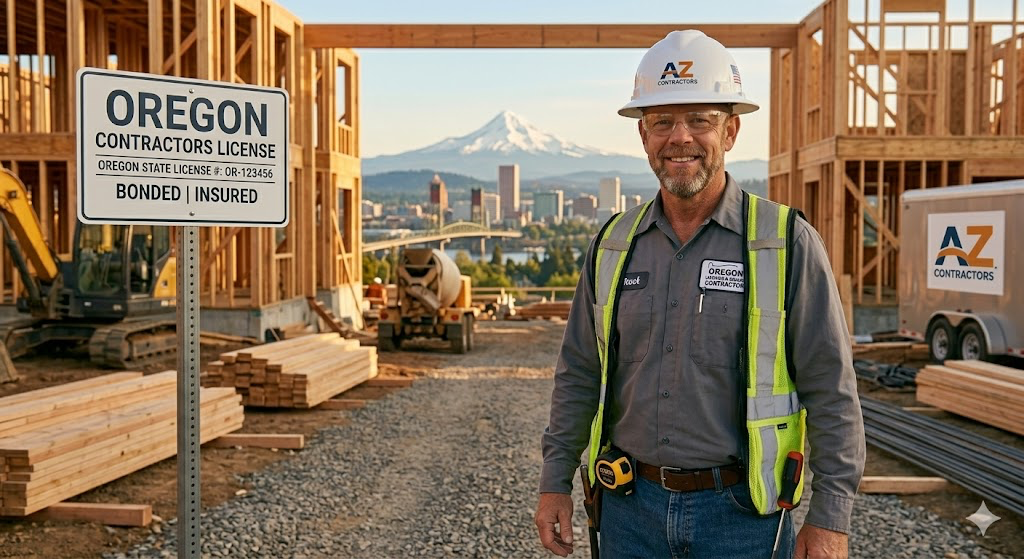
Oregon takes contractor licensing seriously. Whether you’re breaking ground on a Portland townhome, installing commercial HVAC in Eugene, or managing a public works project in Salem, the state requires you to carry a surety bond before you can legally operate. This isn’t paperwork for its own sake — it’s a financial guarantee that protects Oregon homeowners, businesses, and government agencies if a licensed contractor fails to deliver. For anyone working in the state or hiring someone who does, understanding how Oregon surety bonds work is essential.
What Is a Surety Bond in Oregon?
A surety bond in Oregon is a legally binding agreement between three parties: the principal (the business or contractor who purchases the bond), the obligee (the state agency, licensing board, or customer who requires the bond), and the surety (the bonding company that issues the bond and backs it financially).
The bond is a promise. It guarantees that the principal will comply with Oregon’s licensing laws, fulfill their contractual obligations, and pay any valid financial claims against them. If the principal violates those terms — abandoning a project, failing to pay subcontractors, or violating building codes — the surety company pays valid claims up to the full bond amount. The contractor is then required to reimburse the surety for whatever was paid. This reimbursement obligation is what separates a surety bond from insurance: the bond protects the public, not the contractor.
Who Regulates Surety Bonds in Oregon?
Oregon distributes licensing and bonding authority across three separate agencies depending on the type of work performed.
The Oregon Construction Contractors Board (CCB) is the primary regulator for most residential and commercial contractors. It sets bond requirements, reviews complaints, issues monetary judgments, and can file claims against a contractor’s bond if a judgment goes unpaid. The CCB is governed by ORS Chapter 701 and OAR Chapter 812. Contact: 201 High Street SE, Suite 600, Salem, OR 97309 — (503) 378-4621.
The Oregon Landscape Contractors Board regulates landscaping contractors and sets tiered bond amounts based on the size of projects the contractor takes on.
The Oregon Bureau of Labor and Industries (BLI) oversees labor contractors and farm labor contractors, with separate bonding requirements that operate outside the CCB’s jurisdiction.
Understanding which agency regulates your license type is the first step to knowing which bond you need and how much it costs.
Who Needs a Surety Bond in Oregon?
Almost every category of construction and trades work in Oregon requires a license, and every license category requires a surety bond. Oregon law requires anyone paid to perform construction work that improves real property to be licensed and bonded. The bond requirement applies whether the work is residential, commercial, public works, or specialty trade.
There are limited exemptions. Handymen and handywomen, gutter cleaners, and pressure washers are generally not required to carry a surety bond — but this exemption may not apply if they advertise their services. Anyone unsure whether they qualify for an exemption should contact the CCB directly.
Beyond contractors, Oregon requires surety bonds across a wide range of licensed industries: motor vehicle dealers, mortgage brokers and lenders, investment advisers, collection agencies, money transmitters, escrow agents, pawnbrokers, private detectives, healthcare service contractors, grain warehousemen, manufactured structures dealers, and many others. Oregon also requires bonds for court-related matters including probate, conservatorship, and guardianship proceedings.
Oregon Contractor Bond Amounts by License Type
The CCB sets bond amounts based on annual analysis of consumer complaints, project costs, and the scope of work covered by each license type. Bond amounts do not change year to year — the CCB typically reviews and adjusts amounts every three to five years. The larger the project responsibility, the higher the bond amount required.
Commercial Endorsements:
| License Type | Required Bond Amount |
|---|---|
| Commercial General Contractor Level 1 | $80,000 |
| Commercial General Contractor Level 2 | $25,000 |
| Commercial Specialty Contractor Level 1 | $55,000 |
| Commercial Specialty Contractor Level 2 | $25,000 |
| Commercial Developer | $25,000 |
Residential Endorsements:
| License Type | Required Bond Amount |
|---|---|
| Residential General Contractor | $25,000 |
| Residential Specialty Contractor | $20,000 |
| Residential Limited Contractor | $15,000 |
| Residential Developer | $25,000 |
Restricted Residential Endorsements:
| License Type | Required Bond Amount |
|---|---|
| Home Services Contractor | $15,000 |
| Residential Locksmith Services | $15,000 |
| Home Inspector Services | $15,000 |
| Home Energy Performance Score | $15,000 |
| Residential Restoration Contractor | $15,000 |
Landscape Contractors (tiered by project size):
| Project Size | Required Bond Amount |
|---|---|
| Projects $10,000 or less | $3,000 |
| Projects $10,001–$24,999 | $10,000 |
| Projects $25,000–$49,999 or probationary | $15,000 |
| Projects $50,000 or more | $20,000 |
Additional specialty bonds:
| Bond Type | Required Amount |
|---|---|
| Statutory Public Works Bond | $30,000 |
| Construction Flagging Contractor | $25,000 |
| Construction Labor Contractor | $1,000–$30,000 |
Disciplinary Bonds — A Category Most Contractors Don’t Know About
Oregon has a bond category that applies specifically to contractors who have prior violations on their licensing record. Commercial and residential disciplinary bonds range from $20,000 to $100,000 and are required when the CCB determines that a contractor’s history warrants additional financial protection for the public. These bonds are subject to full underwriting and cannot be purchased instantly. They are not mentioned on most competitor sites, but they are an important part of Oregon’s licensing enforcement structure.
The Retainage Bond — Unlocking Held Funds on Large Projects
On Oregon construction projects that are large enough to trigger progress payment milestones, state law allows project owners to withhold up to 5% of each payment as retainage — a financial hold that ensures the project reaches completion. For contractors working on projects over $250,000, this can represent a significant amount of capital tied up for the duration of the job.
Oregon allows contractors to purchase a retainage surety bond to release those withheld funds immediately. The bond amount equals the dollar amount the contractor wants released from retainage, up to the 5% cap. Once the project is completed and all obligations are satisfied, the bond expires and any remaining retainage is released. Premium for a retainage bond is calculated using the same factors as any other contract bond — credit, experience, and prior claims history.
How Much Does an Oregon Surety Bond Cost?
The cost of an Oregon surety bond is a small percentage of the total bond amount — not the bond amount itself. This percentage is called the premium or bond rate. For most Oregon contractor license bonds, premiums range from 1% to 5% of the bond amount depending on the applicant’s credit and experience. Some higher-risk applicants may pay up to 10%.
| Bond Type | Bond Amount | Approximate Annual Cost |
|---|---|---|
| Residential Limited | $15,000 | $150–$300 |
| Residential Specialty | $20,000 | $200–$400 |
| Residential General | $25,000 | $250–$500 |
| Residential Developer | $25,000 | $250–$500 |
| Commercial General Level 2 | $25,000 | $238–$500 |
| Commercial Specialty Level 1 | $55,000 | $550–$1,650 |
| Commercial General Level 1 | $80,000 | $800–$2,400 |
| Statutory Public Works | $30,000 | $300–$900 |
Several residential and restricted residential bonds are available at a fixed price with no credit check, meaning they can be purchased and issued instantly online. Commercial Level 1 bonds always require underwriting and individual quotes.
The primary factors that affect bond cost are: personal credit score of the business owner, industry experience, bonding history and any prior claims, and for larger bonds, business financials and assets. Improving your credit score, maintaining a clean claims history, and demonstrating business reliability can lower your premium at each renewal.
Multi-year terms are available for most residential and commercial Level 2 bonds, offering cost savings compared to renewing annually. Commercial Level 1 bonds expire one year from the effective date and are not available in multi-year terms.
How Oregon Contractor Bonds Work: The Continuous Bond
Most Oregon contractor license bonds are continuous bonds, meaning the bond stays active indefinitely as long as the renewal premium is paid each year. A continuous bond eliminates the need to issue a new bond document or re-file with the CCB at each renewal. The effective date — the date the bond becomes active — is chosen by the contractor at the time of purchase and controls when coverage begins.
If a new surety is used at renewal, a new bond must be submitted to the CCB. Otherwise, the existing bond continues without interruption.
What Happens When a Claim Is Filed Against Your Oregon Bond?
If a customer, subcontractor, or the CCB itself files a valid claim against your bond, the surety company will investigate and, if the claim is found legitimate, pay up to the bond’s full amount. You are then legally obligated to reimburse the surety for every dollar paid. A paid claim also affects your future bonding: premiums typically increase at renewal, and in some cases the surety may decline to renew the bond at all, requiring you to find coverage elsewhere in the specialty market.
The CCB’s claim process typically works as follows: a complaint is filed, the CCB reviews it, a monetary judgment or order may be issued against the contractor’s license, the contractor is required to pay the judgment, and if they do not or cannot, the CCB may file directly against the bond.
How to Get a Surety Bond Oregon
The process is fast, especially for residential-tier bonds. Apply with your contractor information, license type, and the required bond amount. The surety reviews your credit, issues a rate, and you pay the premium. For most residential bonds, the process takes minutes and the bond is delivered digitally the same day. For commercial Level 1 bonds, allow time for underwriting — though quotes are usually available within a day. Swiftbonds works with Oregon contractors across all license types and all three endorsement tracks, with access to multiple surety markets to find the lowest available rate regardless of your credit history.
Swiftbonds LLC
2025 Surety Bond Technology Provider of the Year
4901 W. 136th Street
Leawood KS 66224
(913) 214-8344
https://swiftbonds.com/
How to Get a CCB Contractor License in Oregon
Getting bonded is one step in the Oregon contractor licensing process. The full process through the CCB involves five stages. First, the applicant or their designated Responsible Managing Individual (RMI) must complete 16 hours of pre-license training and pass the required examination. Second, the contractor determines their endorsement type — residential, commercial, or restricted residential — which determines the bond amount required. Third, the business entity must be registered with the Oregon Secretary of State (503-986-2200) as a corporation, LLC, or assumed business name. Fourth, the contractor purchases the required surety bond and obtains general liability insurance; workers’ compensation is also required if the business has employees. Fifth, the completed application is submitted to the CCB along with the bond, insurance certificate, and license fee.
Frequently Asked Questions
What is the minimum surety bond required to get a contractor license in Oregon?
The minimum bond amount varies by license type. The lowest is $3,000 for landscape contractors working on projects $10,000 or under. Most residential contractor license types require $15,000 to $25,000. Commercial Level 1 contractors carry the highest requirements at $55,000 or $80,000.
Can I get a surety bond in Oregon with bad credit?
Yes. Most sureties accommodate applicants with low credit scores, including those with prior bankruptcies. The bond is still available — the premium will be higher than what a strong-credit applicant pays. Specialty market sureties exist specifically for higher-risk applicants.
What happens if I don’t have a surety bond and perform construction work in Oregon?
Operating without a required contractor license and bond in Oregon is a violation of state law. Unlicensed contractors cannot pursue legal remedies for non-payment through Oregon courts, and they expose themselves to significant civil and criminal liability. Consumers can file complaints with the CCB, and the CCB has enforcement authority to issue cease-and-desist orders and financial penalties.
Are handymen required to be bonded in Oregon?
Generally no — handymen, gutter cleaners, and pressure washers are typically exempt from CCB bonding requirements. However, this exemption may not apply if those services are advertised. If you are unsure whether your services fall within the exemption, contact the CCB directly before performing any paid work.
How long does it take to get a surety bond in Oregon?
Residential and restricted residential bonds can be purchased and delivered digitally in minutes. Commercial Level 2 bonds are also typically available same day. Commercial Level 1 bonds requiring underwriting usually have quotes available within one business day.
Do I need a separate bond for each project, or does one bond cover all my work?
For licensing purposes, one bond covers all work performed under that license classification. Project-specific bonds — bid bonds, performance bonds, and payment bonds — are separate and apply to individual contracts, typically for public works projects or large commercial jobs that require them by contract.
What is an Oregon Statutory Public Works Bond?
The Statutory Public Works Bond is a $30,000 bond required for contractors working on publicly funded construction projects in Oregon. It provides additional protection for subcontractors and workers on public jobs, ensuring they are paid for their work. It is separate from the standard CCB contractor license bond and is required in addition to it for public works projects.
Conclusion
Oregon’s surety bond requirements are structured, well-enforced, and essential to working legally in the state. Whether you’re applying for a residential license, bidding on a commercial project, or navigating a retainage situation on a large public job, the right surety bond is the foundation of your ability to operate. Understanding which bond you need, how much it costs, and how to get it quickly makes the difference between a license application that moves forward and one that stalls. Swiftbonds makes it easy to identify your exact bond requirement, compare rates, and get your Oregon surety bond issued — the same day, for most license types.
5 Things About Oregon Surety Bonds That Don’t Appear Anywhere in the Top 10
Oregon is one of the few states where the bond amount itself is directly tied to the CCB’s annual complaint data. Every year, the CCB tallies consumer complaints by contractor type and uses that data — along with average project costs and material price trends — as a formal input to bond amount recalibration. A spike in complaints against residential general contractors, for example, can accelerate a bond amount review for that classification.
Oregon’s CCB maintains a public license lookup database where any homeowner or project owner can verify that a contractor’s bond is currently active and on file before signing a contract. This verification step is built into Oregon’s consumer protection infrastructure in a way that most states do not formally support — and most contractors don’t tell their clients about it.
Oregon’s retainage bond is one of the most financially impactful bond products available in the state, yet it is nearly absent from the competitive landscape. A contractor on a $2 million project who carries a retainage bond can recover up to $100,000 in withheld progress payments immediately rather than waiting until project completion — a significant cash flow advantage that surety bonds uniquely enable.
The CCB’s disciplinary bond tier — requiring contractors with prior violations to carry bonds of $20,000 to $100,000 — functions as a graduated accountability system. A first violation may not trigger a disciplinary bond, but repeated or egregious violations can result in the CCB conditioning license renewal on carrying a much higher bond amount. This creates a financial incentive structure that escalates accountability with the level of risk a contractor has demonstrated.
Oregon has municipal-level bond requirements in addition to state-level ones — and they are not always aligned. Portland, Salem, Eugene, Gresham, Beaverton, Multnomah County, Washington County, and Crook County all have their own performance bond requirements for work done in public rights-of-way, street openings, tree protection, and utility installations. A contractor fully bonded at the state level may still need separate city or county bonds to pull specific permits — a compliance gap that catches out-of-state contractors entering the Oregon market by surprise.
Leave a Reply